

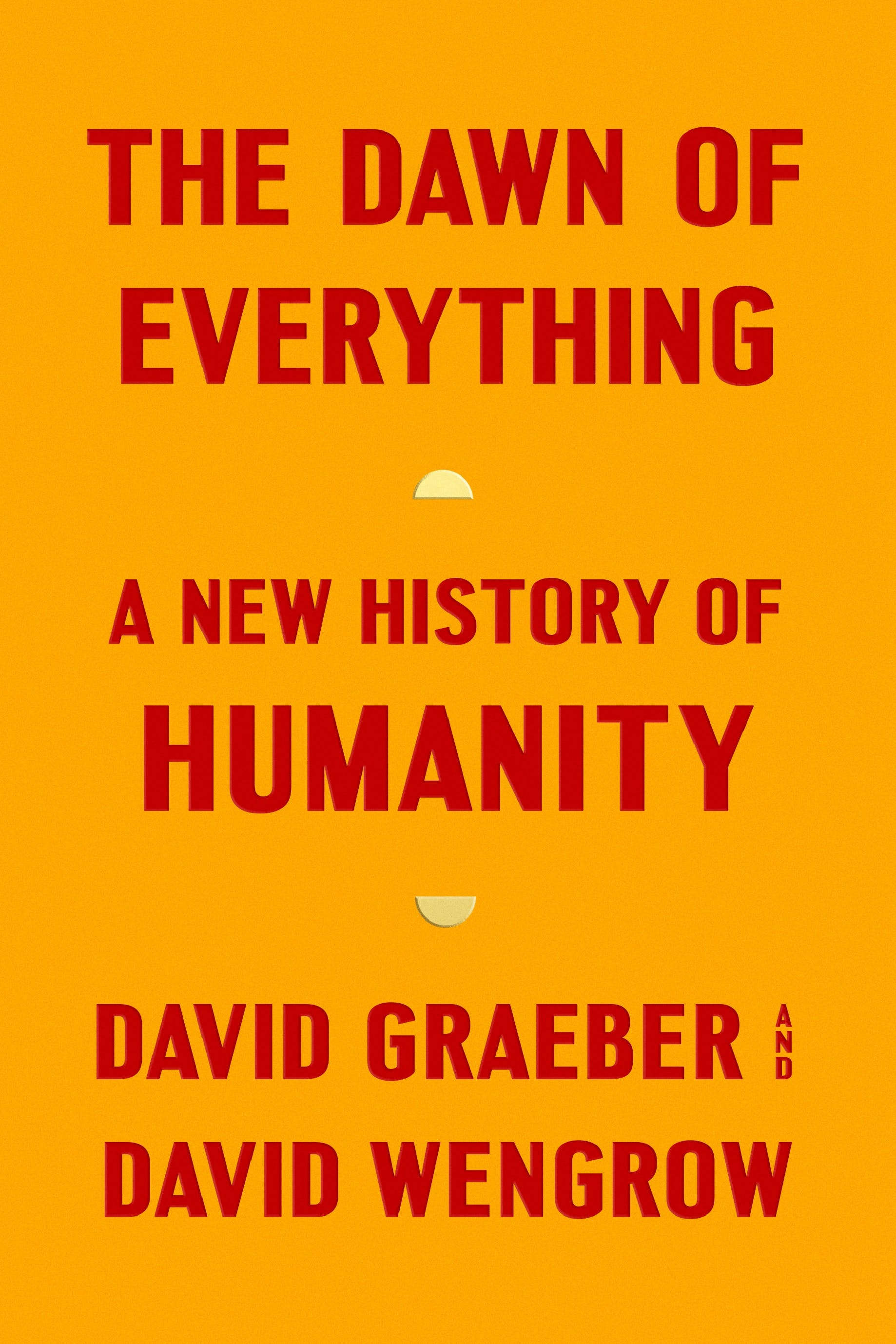
My guest is David Wengrow, an archeologist and professor at University College London. He is the author of several books including; The Archaeology of Early Egypt (2006), What Makes Civilization? (2010), The Origins of Monsters (2014) and The Dawn of Everything (2021), co-authored with the late David Graeber, published in 2021.
On this episode, Wengrow takes us on a powerful journey into the deep history of human societies. His best-selling book The Dawn of Everything offers a staggering historical survey and philosophical argument that reframes many of today’s assumptions about the origins of inequality.
In the wide world of podcasting and online content, many viewers will stumble upon a genre known as “pseudo-archeology”. These popular tales include topics such as ancient technology, lost cities and alternative theories about who really built the pyramids. (Obviously it was aliens, checkmate liberals.) In most cases, these playful stories involve the use of contemporary tools, such as satellite photography or LiDAR, to search for evidence of primordial myths. In the age of social media, this genre has explosively grown and taken on more serious downstream political implications.
As David Wengrow explains in today’s episode, “the idea that the great pyramids of Egypt where not constructed by ordinary African people comes straight from the roots of Egyptology.” Online, we find content creators rehashing Victorian era narratives about proto-linguistic links and prehistoric migrations. In many cases, these age-old tales map directly onto recent and familiar 20th century racial categories.
As online media spills further into the world of real politics, pseudo-archeology may serve as a contemporary myth structure for reactionaries. These stories allow them to project the present-day concept of a nation-state back onto prehistory. In doing so, they seek to justify today’s political divisions. Meanwhile, advances in genetic testing and certain archeological finds have reinvigorated the search for an ancient or “pure” homeland.
Wengrow argues that rather than dismissing these stories as simple conspiracy theories, “instead we should recognize that the conventional narratives of human history actually don’t make a great deal of sense.” The Dawn of Everything , co-authored with the late David Graeber, offers tremendous archeological evidence, that forces us to rethink many ingrained assumptions about the origins of social hierarchy:
David Wengrow: The History of Humanity | Doomscroll
In this episode we revisit the canonical work of Jean-Jacques Rousseau. Rousseau is an enlightenment philosopher whose writings often serve as the foundation for a political common sense among liberals, conservatives and many more views beyond the Overton window. Rousseau weaves a narrative that combines the biblical fall from grace with indigenous critiques of European society that began to circulate in the 1750s.
Wengrow and Graeber reframe these philosophical developments as a critical reflection sparked by the encounter with other societies during the very early stages of globalization. Through questioning the conventional wisdom and emergence of today’s socioeconomic forms, the authors seek to open up new and unexplored pathways for future configurations of human society.
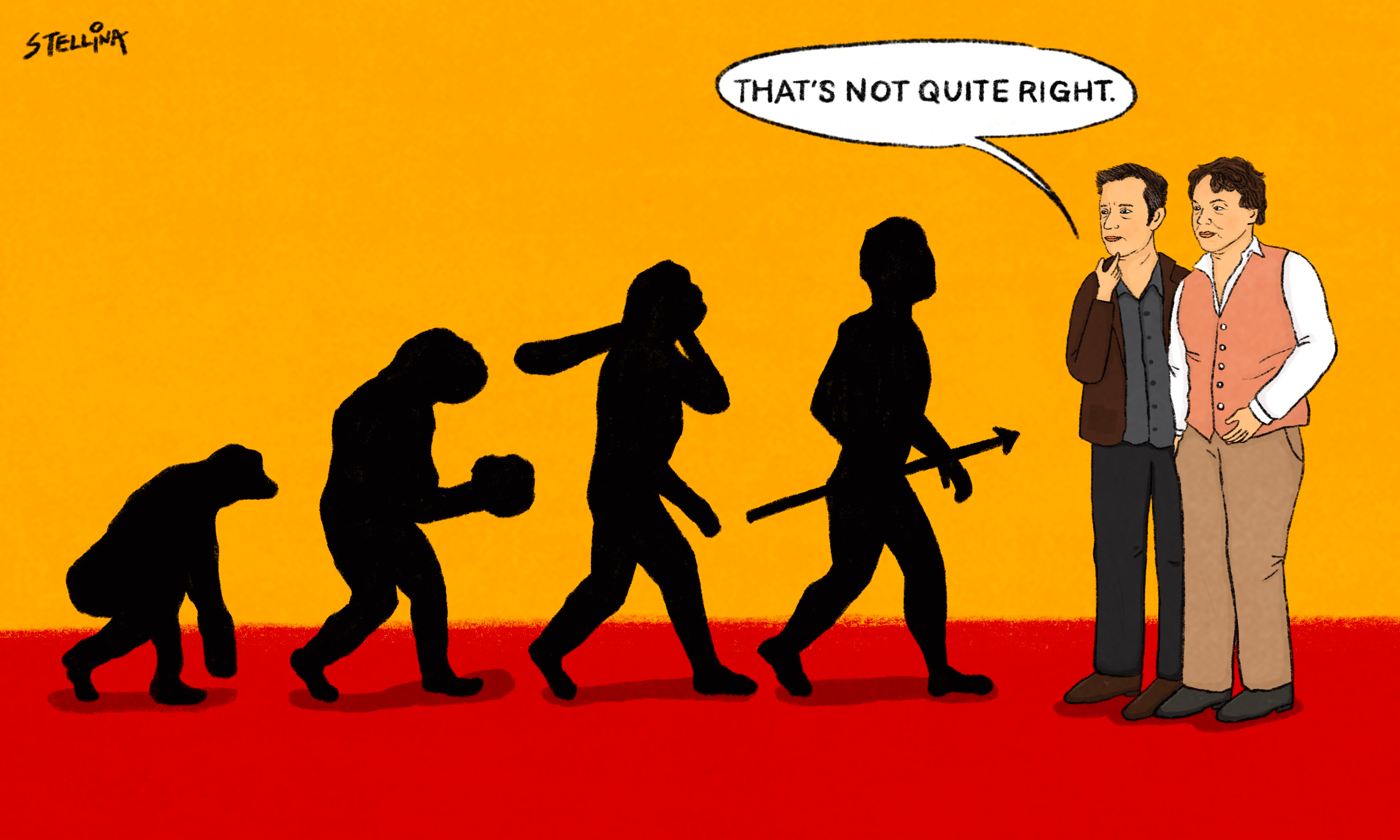
For a preview of what’s to come in David’s forthcoming book The Third Freedom, a follow-up to The Dawn of Everything, see his recent commentary on the collapse of a ‘rules-based’ world order:
Against the Grotian Tradition | London Review of Books
On this week’s bonus episode, we dive deeper into pseudo-archaeology’s racial classifications and implicit myth structures. A few years ago, I felt more optimistic about the potential to debunk conspiracies or to propagate counter-narratives. Today, I’m not sure these public discussions help to diffuse bad ideas. In some cases they might unintentionally amplify them. For now, I plan to keep these more sensitive discussions on the private feed. Later on, we explore the concept of sortition, Greek democracy and the early Aztec parliamentary system:

Explore these related episodes:


This is one of my favorite and most reread books, and I really love this interview, such an important voice and point of view to include in your series. thanks very much.